In short
- A standard 1.8 m paling fence costs about $180 to $280 per metre, built.
- Butted palings gap as they dry. Lapped palings do not.
- Posts are H4, rails and palings H3.2.
- A capping rail and clear ground at the base add years.
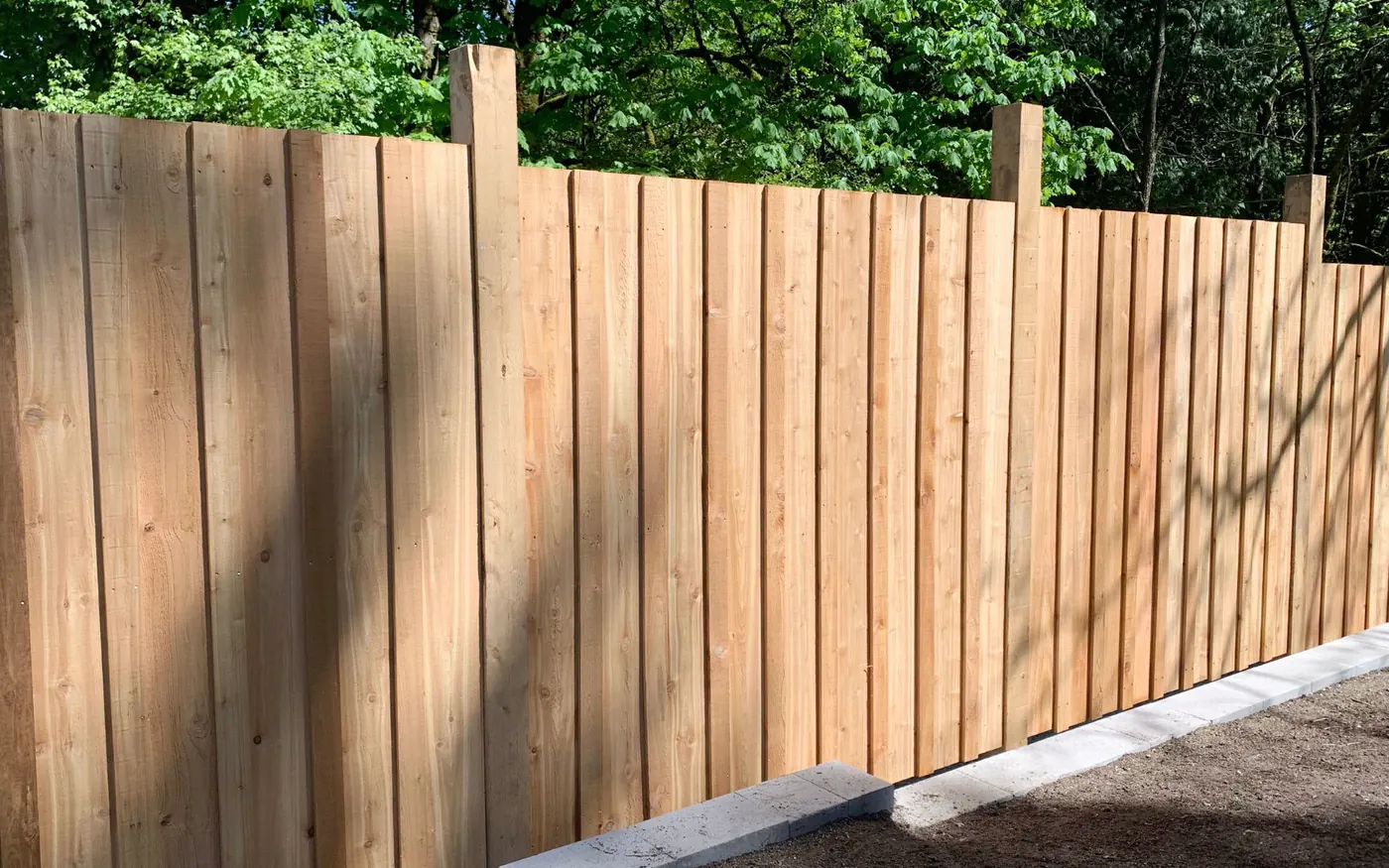
A paling fence is a row of vertical timber boards fixed to horizontal rails between posts. It is the standard boundary fence in New Zealand because it gives full privacy for the least money: about $180 to $280 per metre built, at the usual 1.8 metre height. The differences between one paling fence and another are in the style of the palings, the grade of the timber and how well the posts are set.
The main styles
| Style | What it is | Guide price per metre |
|---|---|---|
| Standard butted | Palings side by side on one face of the rails | $180 to $280 |
| Lapped | Each paling overlaps the next by about 25 mm | $230 to $340 |
| Lapped and capped | Lapped palings with a flat capping rail along the top | $230 to $340 |
| Hit and miss | Palings alternate on both sides of the rails, overlapping in elevation | $230 to $340 |
| Board and batten | Butted palings with a narrow batten over each joint | $230 to $340 |
Guide prices per metre of fence, built, materials and labour, on a flat section with reasonable access. A written quote after a site visit is the only firm figure.
Standard butted
The basic fence. One side shows the palings, and the other shows posts and rails. Palings are nearly always supplied wet from treatment, and they shrink as they dry. In Canterbury's dry summers a butted fence that was tight in October can have 5 to 10 mm gaps by February. It is still a good fence. Just know that you will be able to see slivers of the neighbour's garden.
Lapped
Overlapping the palings uses about one more per metre and removes the gaps for good. The fence is also stiffer. This is the style to choose for real privacy, for a pool boundary or for cutting road noise.
Capped
A capping rail is a length of timber laid flat or on a slight slope across the tops of the palings. It keeps rain out of the end grain, where rot starts, ties the top of the fence into a straight line and gives it a finished look. It can be added to any style.
Hit and miss
Palings are fixed alternately to the front and back of the rails. From straight on it is solid. From an angle you get glimpses through. Both neighbours see the same face, so there is no good side or bad side. Wind passes through the offsets, which takes load off the posts on an exposed boundary. See the wind guide.
Timber and treatment
Almost every paling fence in the country is radiata pine, treated to resist rot and insects. The treatment grade has to match where the timber sits.
- Posts: H4. For timber in contact with the ground. A post treated to a lower grade will rot off at ground level years early.
- Rails, palings and capping: H3.2. For timber outdoors, above the ground.
- Fixings: hot-dip galvanised nails or screws. Stainless steel within reach of salt air.
Typical sizes are 100 x 100 mm posts, 100 x 50 mm rails and 150 x 19 mm rough-sawn palings. Heavier 125 mm posts and 25 mm palings are used for taller or more exposed fences. Rough sawn is standard and takes stain well. Dressed timber is smoother, costs more and suits painted finishes. For what palings cost to buy, see the paling price guide.
How a paling fence goes together
- Set out. The boundary is confirmed and a string line run.
- Posts. Holes are dug at about 2.4 metre centres, at least 600 mm deep. Posts are stood, plumbed and concreted, with the concrete shaped so water runs away from the timber.
- Rails. Three rails for a 1.8 metre fence: top, bottom and middle. Two for a low fence.
- Palings. Fixed from one end with two nails at each rail, tops to a string line, bottoms held 50 mm or so above the ground.
- Capping, if specified, then any gates.
Posts do the real work, and the guide to fence post depth and spacing covers them in detail. A crew of two builds 20 to 30 metres in two or three days, including pulling out the old fence.
Height
Palings come in stock lengths of 1.2, 1.5, 1.8 and 2.0 metres. The 1.8 metre fence is the default for side and back boundaries. Front fences are usually lower, both for looks and because district plans often restrict them. On a slope, the fence either steps down in level sections or follows the ground. Check the height rules before going above 1.8 metres or building on a retaining wall.
Which side do the palings face?
There is no law on it. By custom the palings face out, towards the neighbour or the street. On a shared boundary it is whatever the two of you agree. If the fence is part of a pool barrier, the rails generally need to be on the pool side so the outside cannot be climbed.
Finishing: stain, paint or leave it
- Leave it. Treated pine weathers to silver-grey within a couple of years. This costs nothing and the fence is no weaker for it.
- Stain. A penetrating oil stain evens out the colour and slows surface weathering. Wait until the timber has dried, usually six to eight weeks in summer. Recoat every three to five years. Dark stains are popular and show less dirt.
- Paint. Suits dressed timber and picket fences. Rough-sawn timber soaks up a lot of paint and is hard to recoat well.
Making it last
A paling fence should give 15 to 25 years. The ones that reach the top of that range have a few things in common.
- H4 posts, deep enough, with concrete domed above the ground.
- Palings held off the soil. Garden beds built up against a fence rot the bottom 200 mm.
- A capping rail.
- Loose palings renailed before the wind works them off.
When posts start to move at ground level, the fence is near the end. The fence repairs page explains when a repair is worth doing.
Cost and sharing
For 30 metres of boundary, a standard paling fence is about $5,400 to $8,400 and a lapped and capped one about $6,900 to $10,200. On a shared boundary the cost of an adequate fence is generally split with the neighbour under the Fencing Act 1978. A standard paling fence is what most people would call adequate, so if you want lapped and capped and the neighbour does not, expect to pay the difference. The timber fencing page covers getting one built.
Common questions
How much does a paling fence cost per metre in NZ?
As a guide, $180 to $280 per metre for a standard 1.8 metre paling fence, built, and $230 to $340 for lapped and capped.
Why does my new paling fence have gaps?
Palings are usually installed wet from treatment and shrink as they dry, opening gaps between butted boards. It is normal. A lapped fence overlaps the palings so no gaps appear.
How long does a paling fence last?
Usually 15 to 25 years in treated pine. H4 posts, a capping rail and keeping soil away from the palings push it towards the longer end.
What size are fence palings in NZ?
The standard paling is 150 mm wide and 19 mm thick, rough sawn, in lengths of 1.2, 1.5, 1.8 and 2.0 metres. 100 mm wide and 25 mm thick palings are also sold.